

Your Next Android Phone Could Have A Big Battery Upgrade Thanks To The iPhone 18 Pro
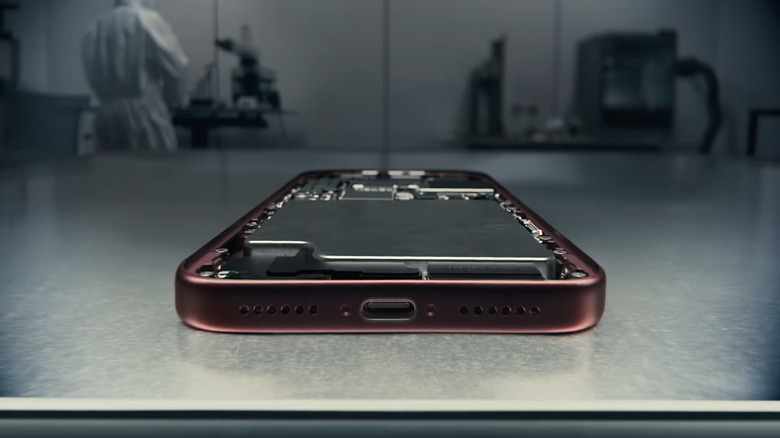
Hate the company or love it, it's undeniable that where Apple treads, others often follow. There is no shortage of examples. The company didn't invent smartphones, but the iPhone basically changed the course of the entire mobile industry, seemingly overnight. Tablets? The iPad wasn't the first tablet on the market, either. Yet, in true Apple fashion, it popularized the tech. It's not just massive shifts either. Think about how almost all phones started packing in fingerprint sensors after the iPhone 5S made Touch ID cool. Seems like the next big thing will have to do with batteries. More precisely, Android phones may start copying Apple's method of packing batteries inside the device, which could lead to massive jumps in overall capacity.
According to reputable leaks, at least one of the major Chinese manufacturers is working on copying Apple's steel-encased battery design that graces the new iPhone 18 Pro Max. Why is this a big deal? Well, the company is combining the steel shell with stacked cells, which may allow it to deliver batteries with capacities as large as 10,000 mAh. Apple's approach solves a major problem with standard soft-pouch battery packs that require extra space for thermal dissipation and to minimize damage in case of cell swelling. Because of its rigid design, Apple was able to pack cells tightly without worrying as much about thermals in an enclosure that's significantly thinner. This is likely the reason why the iPhone 18 Pro Max, with its 5,391 mAh battery, delivers approximately 21.06 Wh (watt-hours) and can truck on for over 19 hours. For comparison, the Galaxy S26 Ultra (5000 mAh battery with 19.4Wh) tops out at a little over 16.
Will these Android phones be available in the United States?
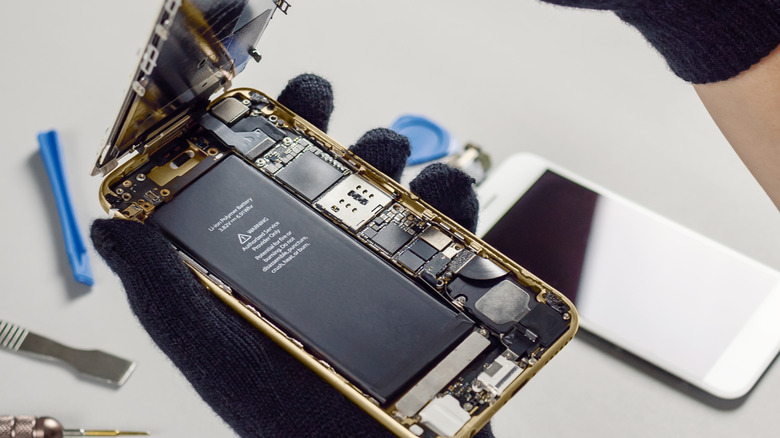
It remains to be seen whether the next generation of these supercharged devices will be available in the United States. Sure, the Android phone with the best battery life, the OnePlus 15 with its 7,300 mAh battery, was initially available in the States, but OnePlus has since withdrawn from the North American market. Elsewhere, the Xiaomi 17 Max that sports an 8,000 mAh battery was never officially released in the United States. The main problem on this front is that phone manufacturers have to meet strict criteria under federal regulations for transporting lithium cells and batteries. The current limit is 20 Wh, which doesn't leave much leeway, and is the reason why most companies selling in the U.S. limit their batteries to around 5,000mAh.
Wait a minute — doesn't the OnePlus 15 technically exceed this limit? After all, isn't 7,300 mAh way over the 20 Wh cap? That's correct. However, OnePlus found a nifty workaround: it switched to a dual-cell battery, and neither of the two exceeds the mandated figures. There's another way to stay legal with batteries, which is what Apple did with the iPhone 18 Max. New iPhones come with firmware that bumps down the capacity below its full watt-hours during transport. The moment users activate the phone, the maximum capacity is unlocked, which technically helps the company stay under the limit. As long as manufacturers implement something similar, Android phones with massive batteries may grace the U.S. market — let's cross our fingers they do.